A foot valve is composed of the valve body, valve cover, valve disc, sealing ring, and gasket, etc. A foot valve is a type of check valve that is typically installed at the bottom of Pump suction line, used to prevent water emptying from suction lines after shut down to prevent water backflow
Brass foot valve has the following characteristics
1. Manufacturing process is simple. As a general valve casting raw material, brass has low hardness. The operation steps for manufacturing brass valves are simpler than other types of valves such as stainless steel valves and bronze valves.
2. Low price, good mechanical properties, and brass is cheaper compared to other materials such as stainless steel, and because of the good sealing effect, it has been loved by people
3. The use pressure range is wide. The brass valve is the most widely used valve, not only suitable for medium and low pressure but also suitable for high pressure.
4. Excellent wearability
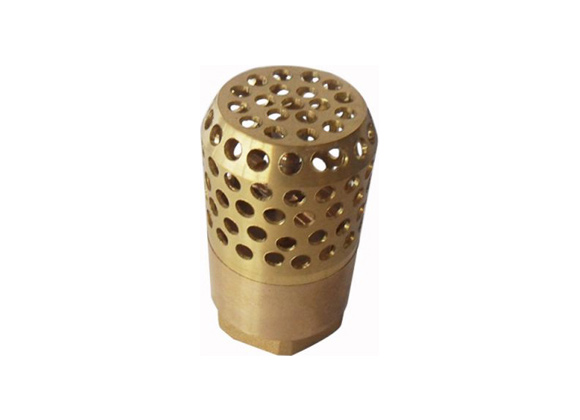
| DN | H | OD | ID |
| DN32 | 86 | 50 | 39 |
| DN40 | 98 | 58 | 45 |
| DN50 | 120 | 73 | 57 |
When it comes to reliable backflow prevention in pumping systems, both brass foot valves and stainless steel foot valves have their advocates. The key differences lie in material composition, corrosion resistance, weight, and long-term maintenance needs. At Ningjin Thriveon, a leading valve supplier in Northern China, we have been manufacturing both brass and stainless steel variants for over a decade, serving markets from the United States to South Africa. This experience gives us unique insight into the pros and cons of each material.
Brass foot valves are prized for their excellent machinability, tight sealing capabilities, and resistance to rust in freshwater applications. Their relatively lower cost makes them a practical choice for irrigation systems, rural water supply lines, and light industrial use. The metal’s natural antibacterial properties also reduce the risk of biological build-up inside the valve body, which helps maintain smooth water flow over time.
On the other hand, SS foot valves—especially those made from 316 stainless steel—excel in environments where saltwater exposure, aggressive chemicals, or extreme temperatures are common. They are heavier and more expensive than brass but offer unmatched durability in marine or chemical processing facilities. Stainless steel’s high tensile strength means it can withstand higher pressures without deformation, making it the go-to choice for critical infrastructure.
One of the most important considerations is water source. If you are drawing from a freshwater well or lake, a brass foot valve with strainer will provide years of trouble-free service at a lower upfront cost. For seawater or corrosive fluids, stainless steel becomes the logical investment due to its longer lifespan in harsh conditions.
In practice, both valve types can deliver reliable performance if correctly matched to their intended application. At Ningjin Thriveon, our engineers help customers assess operating pressures, media composition, and installation environments to determine whether a brass foot valve or a stainless steel model will be the best long-term solution. The right choice often comes down to balancing initial cost, expected service life, and the nature of the liquid being pumped.
A brass foot valve is a one-way check valve installed at the inlet of a pump’s suction line, typically submerged in a well, tank, or other water source. Its primary function is to maintain prime in the pump by preventing backflow when the pump stops operating. At Ningjin Thriveon, where we specialize in inflow control solutions, our water source brass foot valves are engineered to deliver consistent performance in both domestic and industrial setups.
These valves feature a spring-loaded or gravity-assisted disc that opens under suction pressure and closes instantly when the pump is turned off, ensuring that water stays in the line. The addition of a strainer prevents debris, leaves, and sediment from entering the pump, reducing wear and extending equipment life. For example, a brass foot valve with strainer installed in an agricultural irrigation system ensures clean water supply to crops, even in open-pond or river-fed applications.
In rural water supply networks, brass foot valves are often found at the bottom of boreholes or submerged in reservoirs, allowing pumps to draw water efficiently without losing suction overnight. In industrial processes, they prevent costly downtime by eliminating the need to re-prime pumps after every shutdown. The corrosion resistance of brass makes these valves suitable for long-term submersion in fresh or slightly mineralized water.
Selecting the correct size is also important for optimal performance. Whether it’s a 2 inch brass foot valve for large-scale pumping or a compact 1 inch brass foot valve for smaller systems, Ningjin Thriveon provides precision-machined options to match diverse flow requirements. Our customers in Italy, Saudi Arabia, and the US often report that our brass models maintain sealing integrity even after years of continuous use, a testament to our strict quality standards.
Simply put, a brass foot valve is not just a component—it’s a safeguard for pump systems, ensuring efficiency, longevity, and reliable water delivery.
The brass foot valve price can vary significantly depending on size, manufacturing quality, and included features like strainers. At Ningjin Thriveon, we offer a complete brass foot valve price list for international buyers, ensuring transparency and competitive rates without compromising on quality. Since our valves are produced in-house with advanced machining equipment, we maintain tight cost control, allowing us to pass savings directly to our clients in the United States, South Africa, and beyond.
For example, a 2 inch brass foot valve price is typically higher than that of a 1 inch brass foot valve price due to increased material usage and flow capacity. Specialty configurations, such as a brass foot valve with strainer, may cost slightly more but offer better long-term value by protecting pumps from debris damage. In heavy-duty pumping environments, this added protection often translates into significant maintenance savings over time.
It’s important to note that price should never be the sole deciding factor. Low-cost valves from uncertified sources may use inferior brass alloys, leading to premature corrosion, leakage, or even system failure. Our brass foot valves undergo rigorous pressure testing, dimensional checks, and surface inspections before shipment, ensuring they meet both international and customer-specific standards.
Buyers often evaluate cost per service year rather than initial purchase price. In this context, a well-made Ningjin Thriveon valve often proves more economical over its lifespan, especially when paired with correct sizing. For high-volume projects, our bulk purchase discounts and customized packaging solutions make our pricing even more attractive.
Whether you are sourcing a 3 inch brass foot valve for industrial pumping or a 1 1/4 brass foot valve for residential use, our sales engineers can provide a tailored quotation based on order volume, shipping destination, and technical requirements. This combination of fair pricing, proven durability, and responsive support is why Ningjin Thriveon remains a trusted supplier for clients worldwide.
Related Products
Call us on:
+86-311-86935302
+86-311-86935302
Email Us:
info@thriveonvalve.com
South of Huanmadian Village Town, Ningjin County, Xingtai, Hebei Province, China