Aug . 05, 2025 11:15
The Manual Butterfly Valve is a critical component in fluid control systems, offering a balance of simplicity, durability, and efficiency. This article delves into the technical specifications, advantages, and applications of manual butterfly valves, while also highlighting the role of industry standards and the expertise of manufacturers like Ningjin Thriveon Valve Co., Ltd.. By integrating insights from the National Institute of Standards and Technology (NIST), this guide ensures authoritative and reliable information for engineers, technicians, and industry professionals.
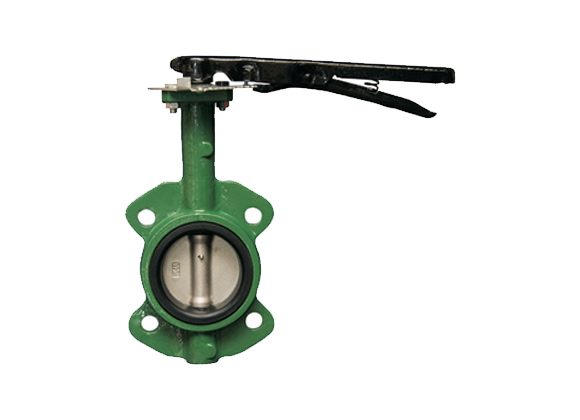
A manual butterfly valve is a type of quarter-turn valve that controls the flow of fluids through a pipeline by rotating a disc within the valve body. Unlike pneumatic or electric actuated valves, manual butterfly valves are operated by hand, typically via a lever or gear mechanism. This simplicity in design makes them cost-effective and easy to maintain, particularly in applications where automated control is unnecessary.
The core components of a manual butterfly valve include the body, disc, stem, and seat. The body is constructed from materials such as grey cast iron, ductile cast iron, stainless steel, or carbon steel, ensuring compatibility with various fluid types and operating conditions. The disc, often made of ductile cast iron, stainless steel, or aluminum bronze, rotates to open or close the valve. The stem connects the disc to the actuation mechanism, while the seat (made of EPDM, PTFE, or metal) ensures a tight seal when the valve is closed.
Manual butterfly valves are typically operated using a lever or gear system. Lever-operated valves are ideal for low-torque applications, while gear-operated valves provide enhanced mechanical advantage for larger or higher-pressure systems. Both mechanisms are classified as manual butterfly valves, emphasizing their reliance on human input for operation.
The performance of a manual butterfly valve is defined by its material composition, pressure ratings, and compliance with industry standards. Below is a detailed breakdown of key specifications:
| Parameter | Details |
|---|---|
| Material | Body: Grey Cast Iron, Ductile Cast Iron, Stainless Steel 304/316, Carbon Steel Disc: Ductile Cast Iron (Nickel-plated/Nylon coated), Stainless Steel 304/316, Aluminum Bronze Stem: Stainless Steel 410/416/304/316 Seat: EPDM, BUNA-N, PTFE, Viton, Hypalon, Neoprene, Metal Seated |
| Pressure Ratings | CLASS 125/150, PN10/16/25, 5K/10K/16K |
| Standards Compliance | API 609, BS5155, MSS SP-67/68, EN593 |
| Installation Guidelines | 1. Align flanges to allow valve passage with disc in half-open position. 2. Avoid gaskets between flanges. 3. Bolt flanges without tightening nuts initially. 4. Fully open the valve to verify alignment, then tighten nuts. |
Manual butterfly valves offer several distinct advantages over their automated counterparts, making them a preferred choice in specific applications:
These benefits are further supported by NIST research on fluid dynamics and material science, which underscores the importance of simplicity and durability in industrial components.
Manual butterfly valves are widely used across industries due to their versatility and robustness. Key applications include:
These valves regulate flow in municipal water systems, sewage treatment plants, and desalination facilities. Their resistance to corrosion and ability to handle high volumes make them ideal for such environments.
Used in chemical processing, food and beverage, and pharmaceutical industries, manual butterfly valves control the flow of liquids and gases in pipelines. Their compliance with standards like API 609 ensures safety and efficiency.
In heating, ventilation, and air conditioning systems, these valves manage airflow and coolant distribution, contributing to energy efficiency and system longevity.
Manual butterfly valves are employed in fire sprinkler systems and hydrant networks, where reliable shut-off capabilities are critical.
As a leading manual butterfly valve manufacturer, Ningjin Thriveon Valve Co., Ltd. has established itself as a trusted provider of high-quality fluid control solutions. With a focus on innovation and precision, the company adheres to international standards such as API 609 and EN593, ensuring its products meet the rigorous demands of global markets.
Headquartered in Hebei Province, China, Ningjin Thriveon combines advanced manufacturing techniques with a commitment to sustainability. Their product range includes manual wafer butterfly valve DN150, manual exhaust butterfly valves, and manual butterfly valves with limit switches, catering to diverse industrial needs.
The company’s dedication to quality is reflected in its adherence to NIST principles, which emphasize accuracy, reliability, and performance in engineering solutions.
A manual butterfly valve is a type of quarter-turn valve operated by hand, typically via a lever or gear mechanism. It is used to control fluid flow in pipelines, offering a simple and cost-effective alternative to automated systems.
Manual butterfly valves are known for their compact design, low maintenance, and cost-effectiveness. They are ideal for applications where automated control is not required, such as in low-pressure systems or emergency shut-off scenarios.
Manual butterfly valves adhere to international standards such as API 609, BS5155, MSS SP-67/68, and EN593, ensuring compatibility and performance across industries.
The manual butterfly valve remains an essential component in modern fluid control systems, combining simplicity, durability, and cost-effectiveness. By understanding its technical specifications, advantages, and applications, engineers and industry professionals can make informed decisions about its use in various environments. Manufacturers like Ningjin Thriveon Valve Co., Ltd. continue to innovate, ensuring their products meet the highest standards of quality and performance. As highlighted by NIST research, the reliability of such components is vital to advancing industrial efficiency and safety.
National Institute of Standards and Technology (NIST). (n.d.). Driving Innovation. Retrieved from https://www.nist.gov.
Ningjin Thriveon Valve Co., Ltd.. (n.d.). Manual Butterfly Valve. Retrieved from https://www.thriveonvalve.com/manual-butterfly-valve.html.
Related Products
 Call us on:
+86-311-86935302
+86-311-86935302
Call us on:
+86-311-86935302
+86-311-86935302
 Email Us:
info@thriveonvalve.com
Email Us:
info@thriveonvalve.com South of Huanmadian Village Town, Ningjin County, Xingtai, Hebei Province, China