Email Us

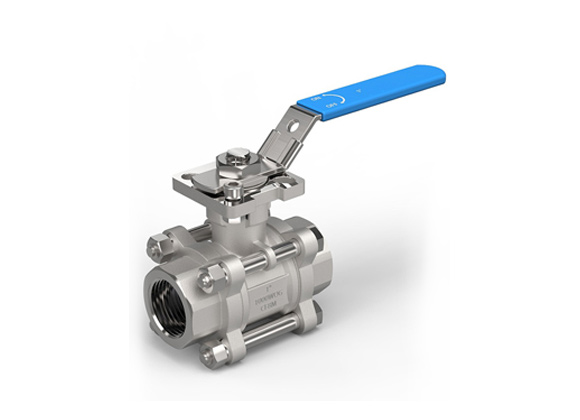
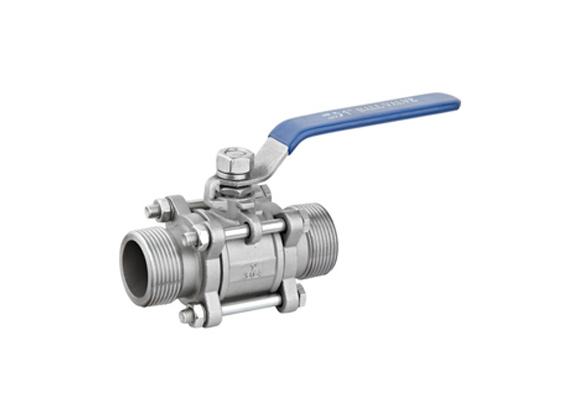
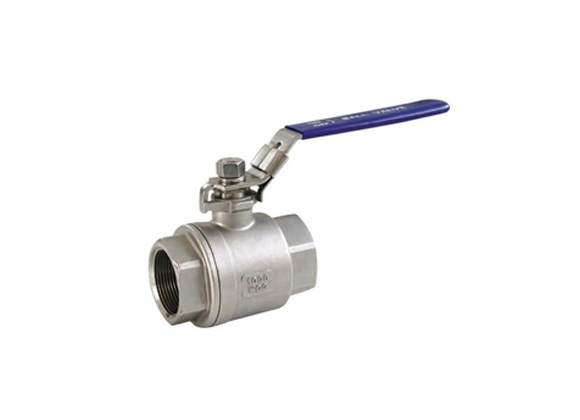
QSL2T-2 FULL BORE 2PCS Ball Valve


The full bore ball valve has a constant-width flow, that is, the size of the pores from inflow to outflow is the same, and its size cannot be less than the value specified by the standard, which is roughly equivalent to the nominal diameter of the specification. For example, the flow diameter of the DN50 full-bore ball valve also needs to be around DN50.

QSL2T-2 FULL BORE 2PC Ball Valve Dimensions

SIZE D L H T
1/4" 10.5 55 48 100
3/8" 10.5 55 48 100
1/2" 15 63 60 100
3/4" 20 74 64 110
1" 25 85 77 137
1-1/4" 32 102 78 158
1-1/2" 38 110 90 163
2" 50 124 102 172
2-1/2" 65 160 128 210
3" 80 185 135 212
4" 100 220 160 253


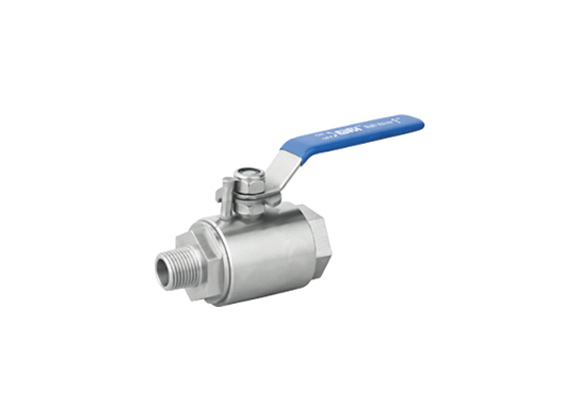
M/F 2PC Ball Valve VS F/F 2PC Ball Valve


When choosing a reliable valve for your system, understanding the differences between an M/F 2PC Ball Valve and an F/F 2PC Ball Valve is crucial. Ningjin Thriveon, as a leading full bore ball valve manufacturer in Northern China, provides detailed insights to help you make informed decisions.


Firstly, the terms M/F (Male/Female) and F/F (Female/Female) describe the end connection types of the 2-piece ball valve. An M/F valve features one male threaded end and one female threaded end, which is typically used to connect pipes of different diameters or threads. On the other hand, the F/F valve has female threads on both ends, often preferred when connecting two pipes with male threads or when inline flexibility is needed.


Our QSL2T-2 FULL BORE 2PCS Ball Valve offers both options, ensuring compatibility with various piping systems. The 2-piece design simplifies maintenance and repair, allowing quick access to internal components without removing the entire valve from the pipeline.


In addition to connection types, the full bore design of our ball valves guarantees that the flow passage maintains the same diameter as the pipeline. This means minimal pressure drop and no flow restriction—an essential feature when fluid velocity and system efficiency matter. Choosing a full bore valve ensures that your system operates smoothly, especially in applications requiring frequent flow regulation or isolation.


Thanks to our decade-plus of experience and a team of skilled engineers, Ningjin Thriveon’s full bore lever ball valve range, including 22mm and 28mm options, is crafted with precision and tested rigorously for durability and leak-proof performance. Our export reach to countries such as the United States and Italy attests to the international trust in our valves.


Understanding the M/F versus F/F distinction is key when selecting a 2PC ball valve. The full bore design paired with appropriate connection types enhances system reliability, reduces maintenance, and supports a broad range of industrial applications.


What Is The Difference Between Reduced Bore And Full Bore Ball Valve?


The choice between a full bore ball valve and a reduced bore ball valve can significantly impact the performance of your piping system. At Ningjin Thriveon, a premier valve supplier in Northern China, we emphasize educating customers on these technical differences to optimize flow control solutions.


A full bore ball valve—also called a full port valve—features an internal diameter that matches the pipeline, allowing fluid to flow with little to no resistance. This design minimizes pressure loss, making it ideal for systems that require maximum flow efficiency. Our full bore valve models, such as the 15mm and 22mm full bore isolating valves with handles, are specifically engineered to maintain high flow rates without sacrificing durability.


In contrast, a reduced bore ball valve has a smaller internal diameter than the pipeline, creating a restriction in flow. While this design may cause slight pressure drops, it offers benefits such as smaller valve sizes and reduced cost, which can be advantageous in specific applications where full flow is not critical.


One must also consider the application environment. Full bore valves excel in pipelines transporting viscous fluids, slurry, or requiring pigging operations, due to their unrestricted passage. Reduced bore valves are suitable for less demanding flows or where space and cost savings take precedence.


At Ningjin Thriveon, our engineering team meticulously designs and tests both full bore and reduced bore ball valves to meet international standards and customer expectations. This dedication has positioned us as a trusted full bore ball valve supplier with a strong export portfolio.


Choosing the right valve type directly affects system efficiency, maintenance needs, and longevity. Understanding these differences ensures you select a valve perfectly suited to your industrial or commercial project.


Understanding Reduced Bore Ball Valve Dimensions


Precise knowledge of reduced bore ball valve dimensions is vital when integrating valves into complex piping systems. Ningjin Thriveon, recognized as one of the top valve manufacturers in China, offers clear guidance to facilitate smooth design and installation processes.


Reduced bore valves feature a bore diameter smaller than the pipeline size, resulting in compact valve dimensions compared to full bore counterparts. This reduction affects the valve’s overall length, weight, and flow capacity. For example, a reduced bore valve in a 22mm pipeline will typically have a bore diameter less than 22mm, leading to measurable changes in pressure and flow.
When specifying reduced bore ball valves, attention must be paid to dimensions such as face-to-face length, thread size, and connection standards (NPT, BSPT, etc.). Ningjin Thriveon’s engineering team ensures all valves comply with strict standards to guarantee interchangeability and reliable sealing performance.


Our experience in manufacturing a broad spectrum of valves, including full bore globe valves and full bore check valves, enhances our ability to deliver products with precise dimensional accuracy. This expertise ensures our clients across the globe—from South Africa to Saudi Arabia—receive valves that fit perfectly and function optimally.


Moreover, accurate dimension data helps avoid costly mistakes during procurement and installation phases, reducing downtime and improving system efficiency.


Understanding the dimensional differences of reduced bore ball valves versus full bore options empowers engineers and buyers to make better choices aligned with system needs, budget constraints, and operational goals.


Why Is a Full Bore Valve Critical for High-Pressure Systems? 


In high-pressure industrial applications, using a full bore valve can be a game-changer for safety, reliability, and operational efficiency. These valves are designed to maintain a constant internal diameter, ensuring the flow path does not narrow under pressure. This design reduces stress on connected pipelines and minimizes the risk of flow restriction. For industries handling steam, oil, or chemical fluids, this feature is critical to maintaining consistent flow rates and avoiding equipment failure. Procurement professionals evaluating a full bore ball valve must consider its ability to handle pressure fluctuations without leakage or deformation. Materials and engineering tolerances play a major role in maintaining performance under extreme conditions. Our valves undergo rigorous testing to verify pressure resistance, ensuring buyers receive reliable components suitable for demanding industrial environments. The ball valve 22mm is particularly useful in secondary or branch lines, providing precise control in localized areas while maintaining high-pressure integrity. Even in smaller diameters, a full bore valve ensures minimal pressure drop and smooth flow, critical for processes requiring exact fluid delivery. Buyers can also rely on Ningjin Thriveon Valve Co., Ltd.’s technical support to match valve specifications with system requirements, ensuring maximum performance. Another advantage of a full bore ball valve in high-pressure systems is its durability. Abrasive or high-velocity fluids can erode conventional valves quickly, but the full-bore design distributes stress evenly and minimizes turbulent flow. Maintenance is simplified, as the valve can be serviced without removing entire pipeline sections. For engineers and procurement teams, this translates to lower operational downtime and reduced maintenance costs. In addition, the precision sizing of ball valve 22mm ensures seamless integration with other pipeline components, facilitating standardized inventory management. This is particularly beneficial for companies managing multiple plants or international exports, where uniformity in valve specifications is crucial. Ultimately, the full bore valve is an investment in operational reliability. By choosing Ningjin Thriveon Valve Co., Ltd., customers gain access to valves designed for consistent high-pressure performance, long-term durability, and expert technical guidance. Proper selection of a full bore ball valve or ball valve 22mm ensures safety, efficiency, and minimal maintenance in critical industrial systems.


How Does a Full Bore Ball Valve Ensure Safe Fluid Handling? 


Industrial fluid systems require precision and reliability, and the full bore ball valve is a critical component for achieving safe operation. By maintaining a consistent flow diameter, this valve minimizes turbulence and prevents pressure spikes that can compromise pipeline integrity. Industries dealing with chemical liquids, high-temperature steam, or corrosive fluids rely on this feature to ensure that processes run smoothly and safely. Procurement teams selecting a full bore valve need to consider material quality, pressure rating, and compatibility with system specifications. Ningjin Thriveon Valve Co., Ltd. manufactures valves to meet international standards, guaranteeing that each full bore ball valve can withstand operational stresses without leakage or deformation. For engineers, this reliability translates to lower risk of accidents and less frequent maintenance. The ball valve 22mm plays a pivotal role in smaller pipelines or secondary loops. It provides precise control for regulating flow in sensitive systems while maintaining the benefits of a full-bore design. This ensures that even low-diameter pipelines operate efficiently, reducing potential fluid contamination and minimizing downtime. Safety is further enhanced because the full bore valve design prevents the accumulation of particulates or scaling inside the pipeline. The smooth, uniform interior allows for regular inspection and cleaning, which is essential in industries where contamination could have severe consequences. Procurement teams benefit from knowing that the valve’s design supports regulatory compliance and safety audits, adding another layer of confidence when specifying products. Ningjin Thriveon’s engineering team provides buyers with guidance to select the correct size and material for their full bore ball valve applications. The proper choice of a ball valve 22mm ensures both operational safety and fluid control precision. The valve’s durability, corrosion resistance, and consistent flow characteristics also reduce the frequency of replacements, improving long-term operational efficiency. By integrating a full bore valve into industrial pipelines, companies gain a dual advantage: reliable flow performance and enhanced safety. The combination of engineering precision, high-quality materials, and rigorous testing makes these valves a trusted choice for chemical, oil, gas, and water treatment applications. With the support of Ningjin Thriveon Valve Co., Ltd., buyers can confidently specify full bore ball valve solutions that meet their operational, safety, and maintenance requirements.


What Makes a Full Bore Valve Ideal for Industrial Automation? 


Automation systems demand valves that operate reliably and consistently. A full bore valve delivers smooth flow control and minimal pressure loss, which is crucial for automated processes. Its consistent bore design allows for precise integration with sensors, actuators, and control systems, enabling seamless feedback loops for fluid handling. Procurement teams need to understand that a full bore ball valve reduces turbulence and ensures accurate flow measurements, which are critical for automated operations. Whether controlling water in a municipal system or chemicals in a production line, the valve provides consistent performance under varying flow conditions. The ball valve 22mm is particularly suited for localized automation circuits where compact dimensions are required without sacrificing full-bore performance. These valves maintain the same high flow efficiency as larger sizes, ensuring precise fluid delivery to automated modules or secondary loops. Engineered for durability, the full bore valve withstands repeated operations and fluctuating pressure levels, which are common in automated systems. It also supports remote maintenance protocols, reducing downtime and minimizing operational disruption. Ningjin Thriveon Valve Co., Ltd. ensures that all valves meet international automation standards, providing engineers with a reliable solution for highly controlled processes. Additionally, the full bore ball valve improves operational predictability, enabling accurate dosing, mixing, or flow regulation. By specifying the correct ball valve 22mm, procurement managers can optimize automation sequences, improving system efficiency while reducing energy consumption. In conclusion, integrating a full bore valve into automated systems provides consistency, durability, and precise control. Ningjin Thriveon Valve Co., Ltd. offers extensive guidance on selecting the optimal valve for industrial automation, ensuring your operations remain efficient, safe, and scalable.


Related Products