Email Us

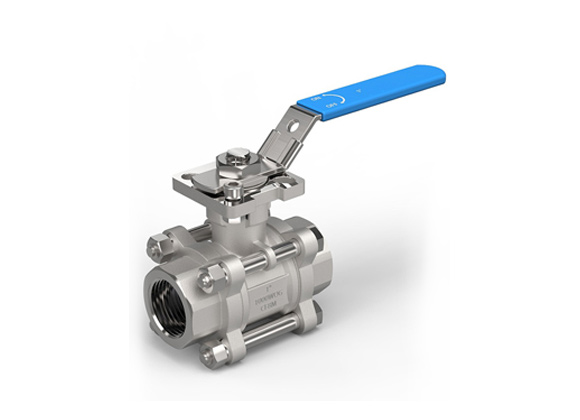
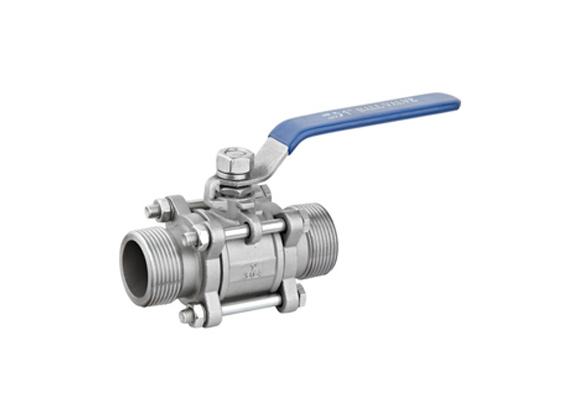
QSL3S-2 3PCS Ball Valve Butt-Welding


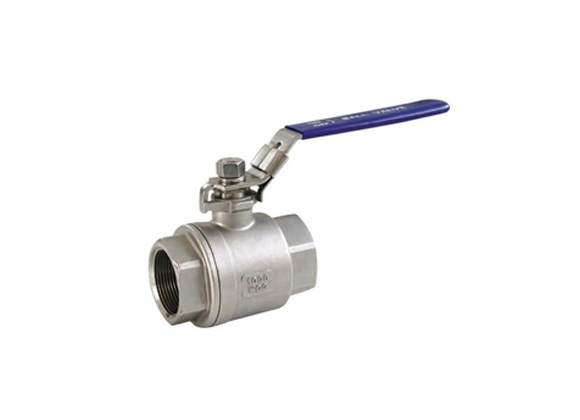
Welded ball valve closure member is a sphere, it is relying on the sphere around the centerline of the valve body 90-degree rotation to achieve open and close a valve. The straight-through ball valve is mainly used to cut off the medium in the pipeline. There is a two-piece and three-piece structure. Butt welding methods include socket welding, groove welding, and flat welding. The butt-welded ball valve is a new type of valve that has been widely used in recent years. This valve can be installed horizontally or vertically.

QSL3S-2 3PC Ball Valve Butt-Welding Dimensions

SIZE L BW E H D T
1/2" 135 10.2 122.9 58 12.7 1.24
3/4" 135 15.8 122.9 61 19.05 1.65
1" 152 22.1 144.9 68 25.4 1.65
1-1/4" 157 28.5 144.9 73.5 31.8 1.65
1-1/2" 190 34.8 188.9 84.5 38.1 1.65
2" 204 47.5 188.9 93.2 50.8 1.65
2-1/2" 254 60.2 255.3 131.8 63.5 1.65
3" 280 72.9 260.8 140 76.2 1.65
4" 306 97.4 322.2 173.6 101.6 1.65


3PC Ball Valve Butt-Welding VS Threaded

1. Material:

Both material of 3 pc ball valve butt-welding and threaded ball valve can be CF8, CF8M, CF3M.

2. Pressure:

Both pressure of 3 pc ball valve butt-welding and threaded can be 200WOG, 800WOG, 1000WOG, 1500WOG, 2000WOG

3. Range of Applications (Difference):

Stardard: ANSI, BS, DIN (similarity)

Sealing Material: PTFE, R-PTFE (similarity)

Connection type:Butt-Welding end


4. Installation (Difference):

3PC ball valve butt-welding need to be welded with pipe installation, threaded end ball valves connect directly with thread.

QSL3S-2 3PC Ball Valve Butt-Welding FAQs

Q Where Are Ball Valves Mainly Used For In A Process System?
A.

Ball valves are used in high pressure lines as an isolation valve.

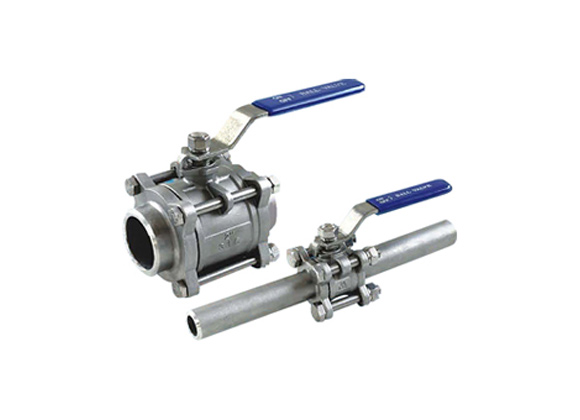
Q What Is The Size Available For 3pc Ball Valve Butt-welding?
A.

1/4”-4”


How Does a Butt Weld Ball Valve Improve Efficiency in Water Treatment Plants? 


Water treatment facilities demand valves that combine durability with leak-proof operation. A butt weld ball valve is ideal because its welded joints and precision sphere control deliver reliable sealing and efficient medium flow. The 90-degree rotation of the ball enables quick opening and closing, which is crucial for process modulation and emergency shut-offs. A butt weld valve’s smooth bore prevents sediment accumulation, reducing maintenance frequency and ensuring consistent water quality. Facilities that integrate these valves report lower energy consumption because of reduced pressure loss across the system. The ability to handle both high and low temperatures makes this valve adaptable to various treatment stages, including chemical dosing and filtration. Maintenance teams appreciate that two-piece or three-piece designs allow access to the internal parts without fully dismantling the piping network. By choosing a butt weld ball valve, water treatment operators secure operational reliability while safeguarding personnel and reducing long-term costs, which is why procurement teams prioritize this option when upgrading or designing pipelines.


How Can a Butt Weld Ball Valve Support Pharmaceutical Manufacturing Processes? 


Pharmaceutical production requires sterile, contaminant-free pipelines. A butt weld ball valve is engineered to meet these standards with smooth internal surfaces that prevent microbial accumulation. The butt weld valve’s welded construction eliminates gaps or crevices that could harbor contaminants, supporting compliance with strict FDA and GMP standards. Its sphere mechanism provides precise control over fluid flow, which is critical for processes such as ingredient mixing, filtration, and dosing. The valve’s materials are chosen for corrosion resistance and chemical compatibility, making it suitable for active pharmaceutical ingredients. Two-piece or three-piece designs allow cleaning and maintenance without disrupting the entire system, improving productivity. Procurement specialists recognize the long-term benefits: reduced contamination risk, operational reliability, and minimal maintenance needs. Installing a butt weld ball valve ensures both regulatory compliance and consistent production output in pharmaceutical applications.


Why Are Butt Weld Valves the Preferred Choice for Petrochemical Refineries? 


Petrochemical refineries demand valves capable of handling highly corrosive fluids at extreme pressures and temperatures. The butt weld ball valve excels in this environment thanks to its fully welded construction, which eliminates potential leak paths. The sphere-based mechanism ensures rapid 90-degree rotation for fast shut-off, critical in emergency situations. The butt weld valve maintains consistent flow rates with minimal turbulence, which is essential for process stability and product quality. Two-piece or three-piece configurations allow internal access for maintenance, reducing downtime during refinery operations. Vertical and horizontal installation flexibility ensures seamless integration into complex refinery pipelines. For procurement managers, investing in these valves guarantees operational safety, durability, and efficiency, making them the top choice in the petrochemical sector.


Related Products