Email Us

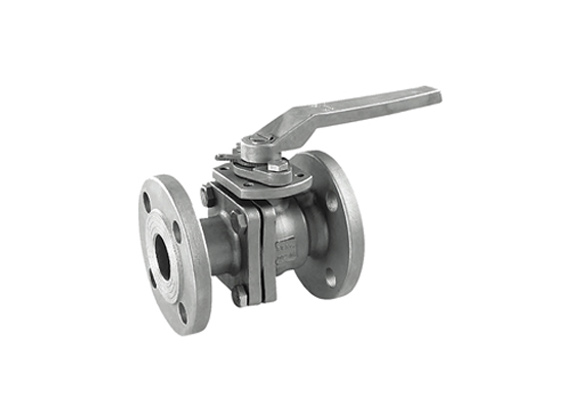
Stainless Steel Flanged Ball Valves

Stainless steel ball valve refers to a ball valve whose body material is stainless steel, only needs to be closely cleaned with a rotational 90-degree operation and a small rotational force torque. The full equality the inner cavity provides a small resistance of the medium, straight through the flow path. The main feature is compact, easy to operate and repair, stainless steel ball valves can be used to control air, water, steam, various corrosive media, mud, oil, liquid metal, and radioactive medium. The ball valve body can be an overall or a combined type. It is generally installed horizontally in the pipeline.

Stainless Steel Flanged Ball Valves Dimensions

Size d L D D1 D2 b f Z-φd H W
1/2" 15 108 89 60.5 35 11 2 4-15 65 120
3/4" 20 117 98 70 43 11 2 4-15 70 130
1" 25 127 108 79.5 51 12 2 4-15 85 130
1-1/4" 32 140 117 89 64 13 2 4-15 100 160
1-1/2" 40 165 127 98.5 73 15 2 4-15 120 205
2" 50 178 152 120.5 92 16 2 4-19 130 205
2-1/2" 65 190 178 139.5 105 18 2 4-19 140 210
3" 80 203 190 152.5 127 19 2 4-19 170 300
4" 100 229 229 190.5 157 24 2 8-19 205 300
5" 125 356 254 216 186 24 2 8-22 260 800
6" 150 394 279 241.5 216 26 2 8-22 350 900
8" 200 457 343 298.5 270 29 2 8-22 500 1000


Stainless Steel Flanged Ball Valves VS WCB


When comparing stainless steel flanged ball valves with WCB (Wrought Carbon Steel) flanged ball valves, several key differences emerge that directly impact long-term performance, application suitability, and maintenance requirements.


Material properties are the most obvious distinction. WCB, made from carbon steel, offers good mechanical strength and is cost-effective for general industrial applications. However, its corrosion resistance is limited, making it unsuitable for harsh environments. In contrast, ss ball valve flange type valves—typically made from SS304 or SS316—excel in corrosion-prone settings such as chemical plants, marine pipelines, and food-grade facilities. These stainless steel grades resist rust, pitting, and chemical erosion, leading to longer service life with less maintenance.


Another significant difference lies in thermal performance and pressure handling. While both valve types are available in ANSI flange classes like 150 and 300, stainless steel valves often maintain better sealing performance under extreme temperatures and rapid thermal cycling. Their precision-machined components and reinforced PTFE seats reduce the risk of leakage or operational failure over time.


Lifecycle cost is another key factor. Although WCB valves generally have a lower initial price, their susceptibility to corrosion and mechanical wear can increase maintenance costs and shorten service life. Over the long term, stainless steel flanged ball valve products often deliver better value, especially in demanding applications. This is where Ningjin Thriveon excels—offering cost-efficient, durable solutions backed by expert engineering.


As one of the top valve manufacturers in Northern China, Ningjin Thriveon produces both WCB and stainless steel ball valves. Our experienced engineering team works closely with clients to help them choose the right valve based on fluid media, system pressure, temperature range, and installation conditions. We’ve supplied high-performance flanged valves to customers in the United States, Saudi Arabia, South Africa, and Italy, earning a reputation for quality and reliability.
Ultimately, selecting between stainless steel and WCB flanged valves comes down to application environment, risk tolerance, and long-term cost priorities. For systems exposed to corrosion, frequent washdowns, or aggressive chemicals, stainless steel remains the trusted choice for performance and peace of mind.


Precautions for Stainless Steel Flanged Ball Valves Installation


Correct installation is vital to the long-term function and safety of ss flanged ball valve systems. Even the highest-quality valves, such as those produced by Ningjin Thriveon, require proper handling and installation practices to prevent leakage, misalignment, and system failure.


The first priority is flange alignment and surface preparation. Inspect both pipeline flanges and valve ends before installation. The ss ball valve flange end must be perfectly clean, flat, and free from scratches, burrs, or dents. Any surface imperfections may compromise gasket sealing and lead to leaks. Apply the gasket evenly and confirm that it matches the flange size and pressure rating.


Next, bolt tightening must be carried out using the correct sequence and torque. Tighten bolts in a diagonal, criss-cross pattern to distribute pressure evenly. Over-tightening can crush gaskets or deform valve components, while under-tightening increases the risk of joint failure. Use a calibrated torque wrench and follow the manufacturer’s guidelines for torque values.


Pipeline cleanliness is also crucial. Before introducing a stainless steel flanged ball valve, flush the pipeline thoroughly to remove welding debris, dust, and foreign materials. Solid contaminants can scratch sealing surfaces or interfere with ball rotation. Thriveon valves are factory-tested for sealing integrity, but field conditions must also meet that standard.
Moreover, external pipe supports should be used to avoid placing stress on the valve body. The valve is not designed to bear the weight of adjoining pipelines or equipment. Poor support can lead to flange warping, stem misalignment, or leaks during operation.


In temperature-sensitive or pressure-variable environments, thermal expansion joints may also be necessary to protect valve integrity. Finally, ensure that the valve is properly oriented (according to flow direction) and that the handle is accessible for maintenance.


At Ningjin Thriveon, our valves are engineered for reliable service, but their full potential is only realized when paired with professional installation practices. With a global client base and technical support team, flanged ball valve manufacturer help users in diverse industries—from water treatment to petrochemicals—achieve safe, efficient valve operations.


Flanged Stainless Steel Ball Valve Lockable


In systems where valve control must be secure and tamper-proof, a flanged stainless steel ball valve lockable provides a smart and essential solution. By allowing operators to fix the valve in an open or closed position using a padlock, this design reduces the risk of unauthorized access, accidental actuation, or misoperation.


These valves are ideal for industries such as petroleum, pharmaceuticals, water treatment, and chemical processing. In high-risk environments, even minor valve misoperation can result in spills, contamination, or production shutdowns. The lockable mechanism offers peace of mind by ensuring that only authorized personnel can operate the valve.


At Ningjin Thriveon, we manufacture durable ss flanged ball valve units with robust lockable handles. Constructed from corrosion-resistant stainless steel (SS304 or SS316), these valves offer superior performance in both aggressive and hygienic applications. The flanged ends conform to ANSI or DIN standards, ensuring reliable connection and pressure integrity.
The lockable feature consists of a handle bracket that can be secured with a standard padlock. This simple mechanism becomes a powerful tool when integrated into safety procedures or maintenance schedules. For example, during system servicing, locking the valve closed prevents accidental pressurization or chemical flow.


Our valves are also fitted with precision-machined PTFE seats, anti-blowout stems, and anti-static devices for increased safety. The locking assembly is designed to resist vibration and corrosion, maintaining secure function even in harsh outdoor or offshore conditions.


As one of Northern China’s leading valve manufacturers, Ningjin Thriveon supplies flanged stainless steel ball valves to clients in the US, Italy, South Africa, and the Middle East. Our engineering team is available to help clients integrate lockable valves into their systems, offering both standard and customized solutions.


Whether you're managing hazardous fluids or simply seeking tighter control over your pipeline system, a flanged stainless steel ball valve lockable is a strategic upgrade. It’s not just about safety—it’s about smart design, operational discipline, and system reliability. And with Thriveon as your partner, dependable quality is always part of the package.


Related Products