Email Us

Wafer Type Butterfly Valve

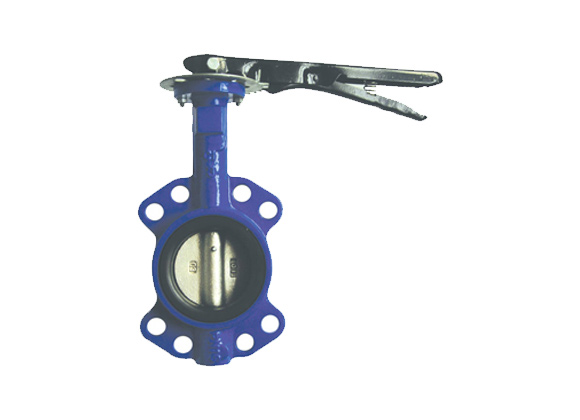
Wafer butterfly valve has simple structure, small volume, light weight, and has good fluid control characteristics. Its disc is installed in the diameter direction of pipeline, so the valve can be quickly opened and closed by rotating its disc 90 degrees.


The wafer body is easy to be connected between two pipeline flange with flange bolts, but it cannot be used at end in a fluid system.

Wafer Type Butterfly Valve Dimensions

Size A B C D H J K L T S W
inch mm
1/1% 25/32 50 110 10 12.7 65 50 7 30 17 9 10
1% 40 60 130 10 12.7 65 50 7 33 27 9 10
2 50 72 135 12 12.7 65 50 7 43 30 11 10
2^ 65 82 150 19 12.7 90 70 9.5 46 49 14 10
3 80 93 160 19 12.7 90 70 9.5 46 68 14 10
4 100 106 180 19 15.9 90 70 9.5 52 88 14 12
5 125 120 195 19 19.1 90 70 9.5 56 113 14 14
6 150 135 211 19 19.1 90 70 9.5 56 142 14 14
8 200 172 238 19 22.2 125 102 11.5 60 193 17 17
10 250 202 279 24 28.6 150 125 14 68 243 22 22
12 300 239 314 24 31.8 150 125 14 78 292 22 24
14 350 257 330 38 31.8 150 125 14 78 329 22 24
16 400 292 365 51 33.3 210 165 22 102 375 27 27
18 450 359 400 51 38.1 210 165 22 114 426 27 27
20 500 397 440 64 41.3 210 165 22 127 477 36 32
24 600 467 525 70 50.8 210 165 22 154 572 36 36

How Does Wafer Type Butterfly Valve Connect?


The wafer type butterfly valve connection plays a vital role in modern piping systems where efficiency, space-saving design, and easy maintenance are essential. Unlike lug or flange-type valves, a wafer type butterfly valve is sandwiched directly between two pipe flanges using long bolts that pass through both flanges and the valve body. This design significantly reduces the installation time and material cost, making it a preferred choice in water treatment plants, HVAC systems, and industrial pipelines.

At Ningjin Thriveon, a leading butterfly valve supplier in Northern China, we specialize in producing high-quality wafer butterfly valve products designed for seamless integration across various global systems. Our valves are compatible with ANSI, DIN, and JIS flanges, and every unit is precision-machined to ensure exact alignment and sealing during connection.
The structure of our wafer butterfly valves includes a streamlined body with integrated centering holes, allowing for accurate positioning between flanges. The valve disc sits in the center and is controlled by a stem attached to a manual lever, pneumatic actuator, or electric motor. When the valve is closed, the disc rests tightly against a resilient seat, forming a leak-proof seal.

What makes this connection method superior is its simplicity and compactness. There’s no need for tapped lugs or threaded bolt holes—just a gasket, bolts, and accurate flange spacing. This allows technicians to perform installations or replacements without dismantling large sections of piping, minimizing downtime and labor costs.

As a company that exports to the United States, Saudi Arabia, South Africa, and Italy, Thriveon understands the diverse requirements of different markets. Our wafer type butterfly valve units undergo strict quality control and pressure testing before shipping, ensuring that clients receive reliable and durable products every time.

Our engineering team, with over a decade of experience, is available to guide customers in choosing the right connection setup based on pressure rating, media type, and pipe diameter. Whether you need a valve for potable water, chemical processing, or wastewater treatment, we offer customizable solutions that prioritize long-term value and operational efficiency.

With a growing reputation as one of China's most trusted valve manufacturers, Thriveon delivers more than just components—we deliver complete inflow control solutions. The wafer type butterfly valve connection is a cornerstone of this commitment, offering simplicity, strength, and performance in a single, compact design.


Wafer Butterfly Valve Installation Made Easy


Installing a wafer butterfly valve might seem straightforward, but it requires attention to detail and technical know-how to ensure a leak-free and long-lasting setup. At Ningjin Thriveon, we not only provide precision-engineered valves but also support our customers worldwide with comprehensive installation guidance.


A proper wafer type butterfly valve installation begins with preparing the pipeline. Technicians must ensure that both pipe ends are cut cleanly and aligned properly. Misaligned flanges or surface irregularities can result in poor sealing and premature valve failure. Once alignment is confirmed, suitable gaskets—compatible with the valve’s operating media—are placed on both flange faces.


The valve should be partially open during installation to prevent disc damage. Using the integrated centering holes of the wafer style butterfly valve, the valve is accurately positioned between the flanges. Long bolts are then inserted and tightened using a cross-torque sequence to ensure even pressure distribution and proper sealing. Over-tightening should be avoided to prevent warping of the valve body or crushing the seat.
After tightening, the valve must be tested by manually or pneumatically rotating the disc to confirm full operation and a proper seal in both open and closed positions. For pneumatic wafer butterfly valve models, the actuator must also be calibrated according to torque and stroke specifications.


At Thriveon, we take pride in offering products that are not only robust in design but also easy to install across a wide range of systems. Whether it's in municipal water supply lines, industrial cooling systems, or fire protection networks, our wafer butterfly valve solutions offer unmatched reliability and ease of use.


Our valves are already in use across projects in Europe, Asia, and North America, and our customers benefit from prompt technical assistance and clear installation manuals. Thriveon's team of experienced engineers is always ready to help resolve on-site challenges, offer recommendations, or design custom solutions tailored to specific site conditions.


As one of the top wafer type butterfly valve manufacturers in China, Thriveon ensures each valve we deliver is user-friendly, durable, and supported by technical expertise. With us, installation isn’t just a step—it’s part of a total performance promise.


Understanding Butterfly Valve Wafer Type Dimensions


Selecting the right butterfly valve wafer type dimensions is essential to ensuring proper fit, flow control, and system compatibility. At Ningjin Thriveon, we provide full dimensional specifications to help engineers, contractors, and system designers choose the right valve for their application.


The wafer butterfly valve is known for its slim profile, making it ideal for systems where space is limited but performance can’t be compromised. Unlike lug or flange valves that may require extra mounting length, the wafer configuration offers minimal face-to-face distance—typically standardized under ISO 5752 or API 609.


Let’s take a closer look at how dimensions vary by size. For smaller systems, such as those using a 4 wafer butterfly valve or a 6 wafer butterfly valve, the face-to-face dimension can be as low as 40–60 mm. For larger applications like 10 wafer butterfly valve installations, this can increase to over 100 mm, depending on the pressure class and body material.


Key dimensions to consider include:


1. Face-to-face length: Critical for ensuring the valve fits between flanges without spacers.


2. Disc diameter: Affects flow characteristics and torque requirements.


3 .Top flange dimensions: Must match actuator or gear operator interface.


4. Bolt circle and hole diameter: Must align precisely with the piping system's flange standard.


At Thriveon, we manufacture valves in a wide range of sizes and materials, including cast iron wafer butterfly valves, stainless steel variants, and epoxy-coated ductile iron models. Every valve comes with a detailed specification sheet outlining its dimensions, pressure rating, and material data.


Because we export globally, our engineering team ensures that all dimensional standards comply with the regulations and preferences of each destination country. Whether you're designing for ANSI 150 piping in the U.S. or PN16 systems in Europe, our butterfly wafer type valves are ready to integrate without compatibility issues.


Clients working on infrastructure, power generation, or marine projects rely on us for valves that fit right the first time. As a company committed to precision and long-term support, we don’t just sell valves—we support your entire project lifecycle, from specification to post-installation follow-up.


If you're unsure about sizing, our team is here to help. With extensive experience and access to 3D drawings, CAD data, and sizing tools, Thriveon is your go-to partner for accurate, efficient, and reliable wafer butterfly valve dimensions.


Related Products